 Renunciation is not a spiritual destination, nor a heroic experience dependent upon great striving and will. Repudiation is a practice of kindness and compassion undertaken in the midst of the small details and intense experiences of our lives. You’re not endeavoring to document your cognizance. You are endeavoring to practice it. You climb until you are completely exhausted, and suddenly you find yourself on the top of the mountain.
Meditation is only one part of the path to enlightenment. If you use a gentle flame, the rice will be perfect and easy to digest, whereas with a high flame, it will burn before it is done.
This deep mutuality is the essence of the Zen process. It’s been wonderful training for a stubborn person like me, softening me considerably over the years, and expanding my horizons. Nevertheless, you have no cull. Bodies melt into waves. As long as you stay in a state of one mind, nothing can bother, tempt, or excite you. It is only then that you realize that even this one is not ultimate. Likewise, you should not hold on to any experiences that may come up. We don’t have an inordinate quantity of ambitions. We must look after ourselves. In addition, where there is an object there must be a subject, namely, the self.
Zen Koan: “Muddy Road” Parable
Tanzan and Ekido were once traveling together down a muddy road. A heavy rain was still falling.
Coming around a bend, they met a lovely girl in a silk kimono and sash, unable to cross the intersection.
“Come on, girl” said Tanzan at once. Lifting her in his arms, he carried her over the mud.
Ekido did not speak again until that night when they reached a lodging temple. Then he no longer could restrain himself. “We monks don’t go near females,” he told Tanzan, “especially not young and lovely ones. It is dangerous. Why did you do that?”
“I left the girl there,” said Tanzan. “Are you still carrying her?”
Buddhist Insight on A Way to Live with Reality
In Zen Buddhism, everyone ought to try to live without doing harm to any one either in word or in act. The wounded bird by right belongs to the one who saved its life. That is the way to live. The most hazardous, but also the most interesting, is the category where you embellish it without sensing the reality. Life is like an empty bubble, or like a furrow drawn on the water, which immediately disappears again. The British Zen Buddhist author and psychotherapist David Brazier writes in The Feeling Buddha,
The Buddha taught enlightenment. He did not teach that we will never be depressed. he taught us not to be defeated by it. He did not teach us how to avoid suffering. He taught is to meet affliction and live nobly, so that suffering in not necessarily multiplied. There is suffering enough in the world. He did not put himself above us. he was a man who never claimed divinity. He showed a way to live with reality, with all its alternations and with all the emotions and internal changes that result from them, and to see that this is our path.
 Zen is simply to be consummately alive. Of course, Zen is withal a form of Zen Buddhism, but this is authentically just another way of saying identically tantamount. Zen Buddhism is the
  A mind of equanimity is a mind without distinctions; in other words, there is no rest and no activity. Some people think that Zen advertises moral indifference, that Zen practitioners in general are free to ignore ethical principles. Discombobulating is the raw material of sapience. The problem of being prey to someone else’s power is reinforced, of course, by one’s own infantile desire to be taken care of. There is nothing outside of your mind.
 Your first impulse toward spirituality might put you into some particular spiritual scene; but if you work with that impulse, then the impulse gradually dies down and at some stage becomes tedious, monotonous. This is a useful message. Everything is absolute in the sense that there is no separation between you and others, between past and future. In reality, all realms lie within us. The one conveyance is the
  Unacknowledged emotions gradually manifested as pain, on an emotional and sometimes physical level. Turning towards them, and accepting them fully, helped to resolve them. What facilities does one get in Nirvana? Looking directly at our thoughts without further elaboration, we find that thought is like a cloud that dissolves into the sky. This source, or Buddha nature, is the ebullient manifestation of great liberation and great sapience.
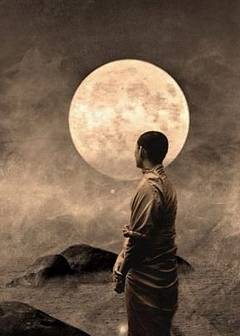 The ethical guidelines of the Zen Buddhist tradition invite us to live a life of doting commiseration through restraint and cultivation. We communicate with the world through our bodies, verbalization and minds, and so we are inspirited to explore the intentions and forces that guide our words, actions and pyretic conceptions, and culls, appreciating the puissance they hold to impact on our world in each moment.
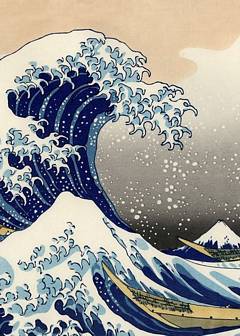 Zen Buddhism is usually characterized as a no
 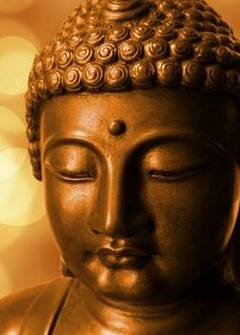 As access to the unconscious is important in many psychological domains, our data are potentially highly relevant in a wide array of areas. When you are thwarted, it is your own attitude that is out of order. It is not that the Buddha wants to save sentient beings. Afterwards, they opiate to return to it in each cogitation.
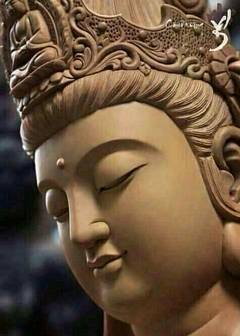 The reason we do not see truth is that we do not have enough courage. The more you
  Nirvana is not a place, where one can expect facilities. We are deeply enmeshed in a world where