When Larry Page Wasn’t Talking to Google Co-founder Sergey Brin

When Larry Page Wasn't Talking to Google Co-founder Sergey Brin

The story of Google co-founder Sergey Brin’s liaison with Google Glass marketing manager Amanda Rosenberg, and his subsequent split from his wife Anne Wojcicki are well known in Silicon Valley. Wojcicki and Brin, who had been married for six years and have two children together, are said to be living separately but that they were not legally separated.

Evidently, in the early days of the Google Glass Project, Amanda Rosenberg had spent time with Anne Wojcicki trying to understand how to target mothers with the gadget. They had thus became friends: Wojcicki had given Rosenberg a Christmas present, and Brin and Wojcicki went out to dinners with Rosenberg and Hugo Barra, her now ex-boyfriend and then an executive in Google’s Android team. But in late 2012 Wojcicki “came across messages between Rosenberg and Brin that caused her to feel alarm,” reported an exposing article in Vanity Fair.

What is less known is that Google CEO Larry Page apparently stopped talking to co-founder and long-time friend Sergey Brin after his affair with Amanda Rosenberg emerged. Larry Page, who has been friends with Brin since they first met during a welcome event for graduate students of Stanford’s computer science department, refused to speak to him after news of the affair emerged. According to an unnamed source quoted in the Vanity Fair article, “Larry is so ethically strict. … I heard Larry was insanely upset by this whole situation and wasn’t talking to Sergey” for a time.

Many employers have written or verbal polices on office romances. Employers implemented policies because they realize they aren’t going to stop people from having romantic relationships. They want to best protect the company from a claim of sexual harassment and ensure there’s no favoritism or conflict, which could hurt productivity and impact morale. In fact, Google’s code of conduct does not forbid dating and romantic relationships between employees,

“Romantic relationships between co-workers can, depending on the work roles and respective positions of the co-workers involved, create an actual or apparent conflict of interest. If a romantic relationship does create an actual or apparent conflict, it may require changes to work arrangements or even the termination of employment of either or both individuals involved. Consult Google’s Employee Handbook for additional guidance on this issue.”

Anne Wojcicki, who got a degree in biology from Yale, is one of the founders of 23andMe, personal genomics and biotechnology company that provides rapid genetic testing. She was even featured on the cover of Fast Company magazine as “The Most Daring CEO in America.”

Anne’s sister, Susan Wojcicki, continues to be one of the top executives at Google, where she is currently CEO of YouTube. In its formative days, Google’s first headquarters was located in her garage, and she was one of the first hires by Brin and Page.

Incidentally, Sergey and Anne met in 1998 when he moved off campus with his Stanford computer-science classmate Larry Page to set up a search-engine company in Susan Wojcicki garage.

Why is Costco so Successful

Why is Costco so Successful

Costco established the warehouse club retail business model, which relies on bargaining power, a no-frills shopping atmosphere, supply-chain efficiencies, and customer-friendly typical markups on branded products. Now, Costco is transforming its no-fuss wholesale business into a global brand.

Membership Fees

Costco has become a significant shopping destination for consumers across all income levels, as well as small businesses. This is foremost because Costco derives approximately 75% of its operating profits from membership fees.

Costco derives nearly all of its profits from membership fees, allowing the firm to sell many of its products at little to no margin, and sometimes at a loss. These loss-leading capacities are reinforced by the firm’s deployment of gasoline to drive store traffic. When blended with membership renewal rates above 85%, these characteristics give Costco a defensible competitive advantage.

Succeeding Overseas

There is little room for more household penetration because Costco already has more than 70 million members; historical sales and earnings growth forecasts may not be justifiable.

In 1985, Costco opened its first warehouse outside the U.S. in Canada. Currently, Costco has 187 locations in Canada, Mexico, the U.K., Japan, Taiwan, Korea, and Australia. Overseas sales more than doubled from 2008 to 2013. While other traditional American retailers grapple to stay competitive in international markets, Costco’s no-fuss warehouse-shopping model is a new experience for international consumers. Remarkably, people in Asian markets are acclimatizing well to shopping in bulk—although it means fastening pallets of toilet paper and enormous teddy bears to the back of their motorbikes as they whizz away from the Costco parking lot.

A Good Living Wage for Employees

Costco has long been known for paying higher wages and offering more liberal benefits than its rivals have—and generating greater sales per square foot, too.

Unlike most retailers, Costco does not see raising employee salaries and growing profits as opposing objectives. While the average hourly wage for a full-time worker at Wal-Mart is $12.81, Costco pays its workers an average of nearly $21. Costco sees the return on this investment in its low employee turnover rates: Just 10% in 2013 and 7% for employees who have worked at least one year. High employee retention permits Costco to reduce considerably on training costs.

Superior Customer Experience

  • A guarantee of quality. Their model promises fundamentally “100% satisfaction” and they mean it. Their return policy stands out among the best in many retail categories and they are exceptionally relaxed about fulfilling it. Costco will take back an empty package of any food, if you are not satisfied, and give you your money back.
  • A extraordinary selection of products that is a bit more refined than most but at a pretty good price. A typical Costco store only carries about 5,000 items, and there is a bunch of those items that rotate regularly.
  • The “treasure hunt” model. The store does have a layout, but within that layout, everything is rotated frequently to keep you looking. This would never work at Walmart or Target —because you’d get frustrated. However, at Costco, it’s part of the fun to “treasure hunt” a new find. They have a very wide selection of very different merchandise types which offers an unique convenience level as a shopper.

CEO Jim Sinegal once said, “If that stuff doesn’t really turn you on, then you’re in the wrong business.” Costco caps margins at a sacrosanct 14% on branded goods, pushes buyers to find creative ways to lower prices and add value, and gets store managers to crank up their efficiency efforts. Under Sinegal’s leadership, Costco has gained a reputation for bargain prices and surprise designer goods.

Koch Industries’ Market-Based Management

Koch Industries

Koch Industries employs a rigorous approach called the Market-Based Management philosophy to run the business. CEO Charles Koch has perfected his management playbook over the decades, and in 2007, published a book called “The Science of Success”, explaining how the system works at Koch.

MBM, as Koch employees call it, lies at the heart of how Koch operates every day. MBM is significant for the reason that it unites Koch’s employees, giving them a common language and a common goal. There is not a lot of art on the walls in Koch’s headquarters, but everywhere you turn, there is a copy of MBM’s 10 guiding principles hanging from the wall. When employees get a free cup of Starbucks coffee in the break room, the principles are printed on the disposable cup.

Five Dimensions of Koch Industries’ Market-Based Management

Companies owned by Koch Industries strive to bring the productive power of the free market into their operations by systematically applying Koch’s market based management philosophy through these five dimensions:

  1. Vision: Determining where and how the organization can create the greatest long-term value.
  2. Virtue and Talents: Helping ensure that people with the right values, skills and capabilities are hired, retained and developed.
  3. Knowledge Processes: Creating, acquiring, sharing and applying relevant knowledge, and measuring and tracking profitability. (Read, “Knowledge sharing in action,” from Discovery newsletter.)
  4. Decision Rights: Ensuring the right people are in the right roles with the right authority to make decisions and holding them accountable.
  5. Incentives: Rewarding people according to the value they create for the organization.

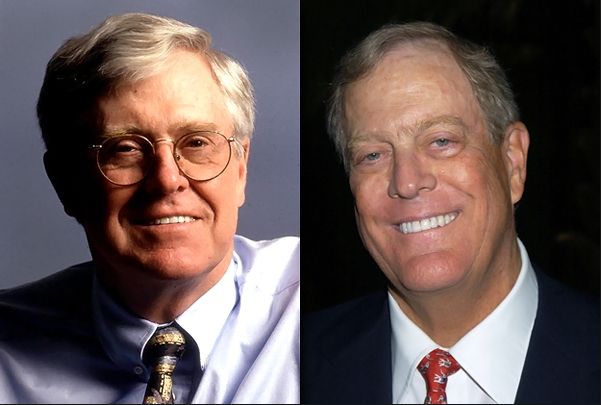
The Kochs Brothers consists of Charles Koch and David Koch. Two other brothers, William and Frederick, cashed out in 1983 and no longer have a stake in the company. The Koch brothers became heir to their father’s company in Kansas, and Koch Industries into the second-largest privately held company in the nation. The conglomerate makes a gamut of products including Dixie cups, chemicals, jet fuel, fertilizer, electronics, toilet paper and much more.

Kochs Brothers: Charles Koch and David Koch

Guiding Principles of Koch Industries’ Market-Based Management

'The Science of Success: How Market-Based Management Built the World's Largest Private Company' by Charles G. Koch (ISBN 0470139889) Market-Based Management has ten guiding principles that set the standards for evaluating policies, practices and conduct, establishing norms of behavior and building the shared values that guide individual actions. These guiding principles also serve as rules of just conduct along with shared values and beliefs. Koch’s focus and hard nosed thinking combined with his application of economics to management decision making, have enabled his firm to grow into a nimble, large company that keeps performing excellently.

  1. Integrity: Conduct all affairs with integrity, for which courage is the foundation.
  2. Compliance: Strive for 10,000% compliance with all laws and regulations, which requires 100% of employees fully complying 100% of the time. Stop, think and ask.
  3. Value Creation: Create long-term value by the economic means for customers, the company and society. Apply MBM to achieve superior results by making better decisions, pursuing safety and environmental excellence, eliminating waste, optimizing and innovating.
  4. Principled Entrepreneurship: Apply the judgment, responsibility, initiative, economic and critical thinking skills, and sense of urgency necessary to generate the greatest contribution, consistent with the company’s risk philosophy.
  5. Customer Focus: Understand and develop relationships with customers to profitably anticipate and satisfy their needs.
  6. Knowledge: Seek and use the best knowledge and proactively share your knowledge while embracing a challenge process. Develop measures that lead to profitable action.
  7. Change: Anticipate and embrace change. Envision what could be, challenge the status quo and drive creative destruction through experimental discovery.
  8. Humility: Exemplify humility and intellectual honesty. Constantly seek to understand and constructively deal with reality to create value and achieve personal improvement. Hold yourself and others accountable.
  9. Respect: Treat others with honesty, dignity, respect and sensitivity. Appreciate the value of diversity. Encourage and practice teamwork.
  10. Fulfillment: Find fulfillment and meaning in your work by fully developing your capabilities to produce results that create the greatest value.

The Four Filters of Warren Buffett and Charlie Munger

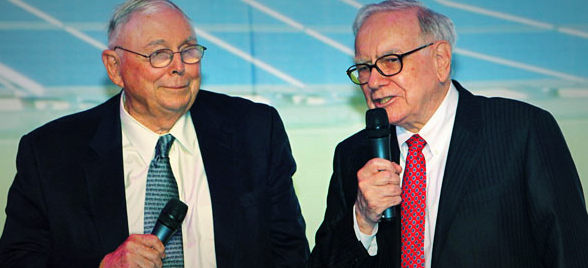
Charlie Munger and Warren Buffett, Berkshire Hathaway

Countless portfolio managers, hedge fund managers, investment analysts, mutual funds, institutional pools of capital and individual investors have grown up devouring everything that’s been said or written by or about Warren Buffett and Charlie Munger over the years.

In the 2007 letter to Berkshire Hathaway shareholders, Warren Buffett wrote, “Charlie and I look for companies that have a) a business we understand; b) favorable long-term economics; c) able and trustworthy management; and d) a sensible price tag.” Based on this sage advice, value investors must look for:

  • A business that we can understand. A business within your circle of competence.
  • A business with favorable long-term prospects. A business with a line of business that is not easy to duplicate. A business with excellent cash flow profile: excellent ability to generate and invest cash.
  • A business led and perated by honest and competent people.
  • A business available for sale at a very attractive price.

The Economic Impact of Aging Japan

The Economic Impact of Aging Japan

The saving rates in Japan will fall dramatically by 2024 and make Japan’s financial wealth decline. There are two direct reasons for this fall: one is that by 2024, more than a third of Japan’s population will be over the age of 65, which will lead the retired household to outnumber households in their prime saving years. Another reason is that the younger generation is saving far less than older generations have, and this truth will amplify the effects of a decline in the number of savers.

This trend will decrease the accumulation of wealth and erode Japanese living standards. What’s more, since Japan has played an important role in financing the massive US current-account deficit, as Japanese funding dries up, this damage may extend to other countries and bring negative impact for economic system of America. For example, if other rapidly industrializing countries could not step up to fill the gap in savings as Japan’s savings rate declines, the United States will probably be forced to trim its trade deficit and this could have enormous repercussion for the global economy.

There are only two ways to mitigate the coming demographic pressure in a meaningful way: increasing household savings and boosting the returns earned on them.

  • Increasing savings: Given the significant increase in average life spans during the past 50 years, rising the retirement age is a way to extent the period when households are most prone to save. In addition, encouraging younger Japanese households to save more is also a helpful step to increase household savings.
  • Raise the rates of return: The most effective change for Japan would be to raise the rates of return on its financial assets. To do so, Japan will have to raise productivity throughout the economy and increase the efficiency of the financial system in allocating capital.

On one hand, basic structural reform, such as elimination of market regulations that would increase competition and spark innovation, tax policies protecting inefficient companies, and ease zoning and land regulations that reduce large companies’ expanding and creating jobs to protect start-ups to do business, could increase the economic-wide productivity.

On the other hand, increasing the financial system’s efficiency ensures the savings are channeled to the most productive investments and improves legal protection for investors and creditors. The diversification of Japan’s household financial assets is also an important means of increasing the efficiency of capital allocation.

Robert Greene’s “The 48 Laws of Power”: 48 Laws of Manipulation

48 Laws of Manipulation

'The 48 Laws of Power ' by Robert Greene (ISBN 0140280197) [Robert Greene’s ‘The 48 Laws of Power’ identifies a darker path to fulfil our deep seeded desire to be powerful. The philosophies and actions advocated in this book are callous, unprincipled, devious, scheming, manipulative—a good dose of pure utilitarian nonsense for the foolish, insensitive, and greedy personality. Manipulation is a term much more appropriate for the suggestions in this book. Manipulation by means of deceit and maintaining the illusion of power is what you are going to learn from this book, not how to be ethical and influential!

  1. Kiss the boss’s ass.
  2. Make enemies. You can learn from them.
  3. Conceal your intentions.
  4. Speak cryptically.
  5. Defend your reputation; destroy those who challenge it.
  6. Be an attention seeker.
  7. Use other people to do things for you and take the credit.
  8. Bait people.
  9. Don’t analyze, act.
  10. People who are hurt are like contagious parasites.
  11. Make people depend on you.
  12. Be “selectively honest”, disarm your “victim” with generosity.
  13. People have no sense of mercy or thankfulness.
  14. Pretend to be someone’s friend while gathering information on them.
  15. Destroy people, annihilate them. Ruin their lives.
  16. Play hookie to make people “want” you.
  17. Engage in interpersonal intimidation.
  18. Be one in the crowd; use the crowd to shield you from your enemies.
  19. Don’t screw over the wrong person.
  20. Be non-committal.
  21. Pretend to be dumb, so they won’t suspect.
  22. Surrender, to stab your enemy in the back.
  23. Use every resource you have to defeat an enemy.
  24. Flatter people, yield to your boss, and be cruel to those under you.
  25. Don’t abide by the social contract. Ally yourself only to yourself. Redefine this self to get as much attention as possible.
  26. Keep your hands clean: erase any knowledge others have of you messing things up. Never admit to your mistakes. Instead, scapegoat other people.
  27. Develop a God complex. Feed people what they want to hear and make them follow you.
  28. Be bold in all of your actions.
  29. Plan out every little thing.
  30. Make your accomplishments seem effortless. Also, never let anyone know how you did them.
  31. Control people’s options.
  32. Feed people the lies they want to hear.
  33. Find out everyone’s button, save this information, and push it accordingly.
  34. Act like a member of royalty.
  35. Master timing.
  36. Show contempt for things (and people) you cannot have. By showing you are upset, you are admitting “weakness”.
  37. Create a lot of spectacles.
  38. Behave like other people as a mask.
  39. Use other people’s emotions; play with them.
  40. Free things are dangerous. Instead, pay for everything yourself and make sure people see it.
  41. Don’t follow in anyone’s footsteps.
  42. Attack someone that bothers you. Don’t bother negotiating or understanding them. Just attack them so they shut up and your reputation remains intact.
  43. Seduce people by playing with their emotions.
  44. Mirror people so they get annoyed and humiliated.
  45. Preach “change” and other vague promises, but never act too much on them.
  46. Pretend to mess up once in a while. People will see that you’re not a sociopath after all.
  47. Achieve in moderation.
  48. Be formless. Form, order, routine equals predictability. And those watchful guys following you over your shoulder all this time will spot that and destroy you.

C/C++ Functions to Convert to UPPER CASE and lower case

C++ C and C++ implementations that follow the standard library provide two functions in the header ctype.h to convert to upper and lower cases.

char upperA = toupper('x');
char lowerA = tolower('X');

But if you want to write your own function to convert cases, here are two functions that use the string.h header.

C and C++ Functions to Convert to lower case

string lowercase(string s)
{
        for (unsigned int i = 0; i < s.size(); i++)
                if (s[i] >= 0x41 && s[i] <= 0x5A)
                        s[i] = s[i] + 0x20;
        return s;
}

C and C++ Functions to Convert to UPPER CASE

string uppercase(string s)
{
        for (unsigned int i = 0; i < s.size(); i++)
                if (s[i] >= 0x61 && s[i] <= 0x7A)
                        s[i] = s[i] - 0x20;
        return s;
}

30 Verses and Thoughts from the Bible for Victorious Living, chosen by Joel Osteen

Joel Scott Osteen, an American preacher, televangelist, author

I’m clearly a big advocate of positive thinking as the best way to achieve your goals, but it transpires that it can lead to happiness too. Know that the future is taken care of in a positive way, as you allow yourself to enjoy the present moment. Cheerfulness and self-esteem are some of the best indicators of people who lead contented lives. Happy people feel empowered, in control of their lives, and have a positive outlook on life. Feel good about who you are, and know that your victory benefits others.

You can have victory in every area of your life. You deserve this time of victory. Your steadfast focus and dedication have resulted in blissful manifestation. Pastor, televangelist, and author Joel Osteen has put together a simple and effective tool to help you set your thoughts on victory. Peace and pleasant feelings are yours right now. Let your focus be on this present moment, and savor each feeling and experience fully. You will feel encouraged and ready to face any difficulty you are dealing with. When your thoughts are filled with victory, your actions and experiences will be filled with victory—to the Glory of God!

  • Think The Way God Thinks—“No man has ever seen, heard or even imagined the wonderful things God has in store for those who love the Lord.” From I Corinthians 2:9
  • Develop a Vision of Victory—“Behold I am doing a new thing. Can you not perceive it?” From Isaiah 43:19
  • Make a Plan—“Commit to the Lord whatever you do and your plans will succeed.” From Proverbs 16:3
  • 'You Can, You Will: 8 Undeniable Qualities of a Winner' by Joel Osteen (ISBN 1455575712) Speak What You Seek—“Declare what is to be …” From Isaiah 45:21
  • Standing Strong During Adversity—“Put on the full armor of God, so that when the day of evil comes, you may be able to stand your ground.” From Ephesians 6:13
  • Be Joyful Always—“For the joy of the Lord is your strength.” From Nehemiah 8:10
  • You are Approved—“Before you were ever formed in your mother’s womb, I saw you and approved you.” From Jeremiah 1:5
  • Pursue Your Victory—“This one thing I do, forgetting what lies behind, I press on towards the mark …” From Philippians 3:13-14
  • Have an Attitude of Gratitude—“Let no foul or polluting language come out of your mouth.” From Ephesians 4:29
  • Overcome Opposition—“A wide door has been open to me and with it are many adversaries.” From I Corinthians 16:9
  • Declare Blessings—“Say to them, may the Lord bless you protect you.
    May the Lord smile upon you and be gracious to you.
    May the Lord show you His favor and give you His peace.” From Numbers 6:23-26
  • 'Become a Better You: 7 Keys to Improving Your Life Every Day' by Joel Osteen (ISBN 0743296923) Develop a Restoration Mentality—“I will restore the years that the locust has eaten and I will bring you out with plenty and you shall be satisfied.” From Joel 2:25-26
  • Focus on The Future—“Do not cast away your confidence for it will be richly rewarded.” From Hebrews 10:35
  • Feed You Faith—“.. For everyone born of God overcomes the world. This is the victory that has overcome the world, even our faith.” From I John 5:4
  • Live to Give—“Give and it will be given to you. A good measure, pressed down, shaken together and running over …” From Luke 6:38
  • Live By The Spirit—“If you live by the Spirit, you’ll not fulfilled the lusts of the flesh” From Galatians 5:16
  • Release The Past—“… but this one thing I do, forgetting those things which are behind, and reaching forward to what lies ahead, I press toward the mark for the prize of the high calling of God in Christ Jesus.” From Philippians 3:13-14
  • 'Break Out!: 5 Keys to Go Beyond Your Barriers and Live an Extraordinary Life' by Joel Osteen (ISBN 1414585890) Filter Your Thoughts—“I will set no evil before my eyes.” From Psalm 101:3
  • Stand Firm—“Fear not; stand firm and see the salvation of the Lord, which He will work for you today.” From Exodus 14:13
  • Live a Balanced Life—“They have made me a keeper of vineyards, of my own vineyard I have not kept.” From Song of Solomon 1:6
  • Expect Favor—“… the Lord bestows favor and honor; no good thing does He withhold from those who walk is blameless .” From Psalm 84:11
  • Forgive Past Hurts—“But let all bitterness, indignation, wrath, resentment, quarreling and slander (evil-speaking, abusive or blasphemous language) be banished from you.” From Ephesians 4:31
  • 'Your Best Life Begins Each Morning: Devotions to Start Every Day of the Year' by Joel Osteen (ISBN 0446545090) Raise Your Self Image—“As a man thinks in his heart, so is he.” From Proverbs 23:7
  • Avoid Strife—” For where there is jealousy and selfishness, there is strife and every evil work.” From James 3:16
  • Wait and Rest—“The vision is for an appointed time. Though it tarry, wait earnestly for it, for it will surely come.” From Habakkak 2:3
  • Expect God’s Best—“Those who wait for the Lord, who expect, look for, and hope in Him, shall renew their strength.” From Isaiah 40:31
  • Be Who You are—“For you are God’s own handiwork, recreated in Christ that you may do the good works that God predestined.” From Ephesians 2:10
  • Let God Defend You—“God is just a God and He will repay the exact compensation owed you. He will settle and solve the cases of His people.” From Hebrews 10:30
  • Guard Your Heart—“Keep and guard your heart with all vigilance and above all that you guard, for out of it flows the springs of life.” From Proverbs 4:23
  • Praise Him For The Victory—“But You will give us victory over our enemies… And we will praise Your Name forever.” From Psalm 44:7-8

Recommended Books

Prem Watsa’s Recommended Books for 2014

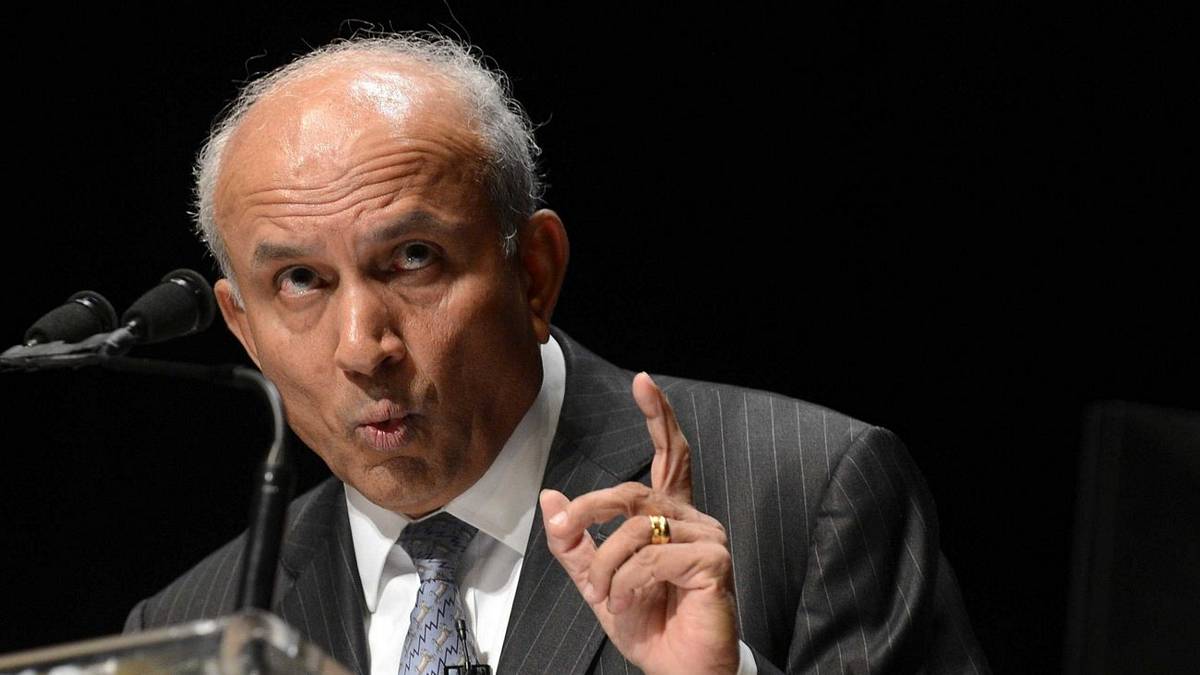
Prem Watsa of Fairfax Financial Holdings (Canada)

Prem Watsa is a shrewd investor who is often called the Canadian Warren Buffett. He is an immigrant from India who arrived in Canada in 1972 and has been running Fairfax Financial Holdings since 1985. Prem Watsa was born in Hyderabad and studied chemical engineering at IIT-Chennai before emigrating to Canada. Under his leadership, Fairfax’s sales and earnings have been growing and it’s stock price has compounded at the average rate of 19 percent annually.

On understanding and managing risk, Prem Watsa has said, “this idea exists in the marketplace that you can take any risk, put it into a structure, into an asset-backed bond, and you can eliminate, get rid of the risk. … Protect yourself, you don’t know when Katrina comes in.”

Here are five books recommended by Prem Watsa at the 2014 annual meeting of Fairfax Financial Holdings on 09-Apr-2014, Wednesday at Toronto’s Roy Thomson Hall.

25 Best Quotes on Being a Manager

Twenty-Five Quotes on Being a Manager

'Being the Boss: The 3 Imperatives for Becoming a Great Leader' by Linda Hill, Kent Lineback (ISBN 142216389X)“Most ideas on management have been around for a very long time, and the skill of the manager consists in knowing them all and, rather as he might choose the appropriate golf club for a specific situation, choosing the particular ideas which are most appropriate for the position and time in which he finds himself.”
Sir John Harvey-Jones, English Businessman

“The best executive is the one who has sense enough to pick good men to do what he wants done, and self-restraint enough to keep from meddling with them while they do it.”
Theodore Roosevelt, Former President of the United States

“Sure, lots of managers talk about the importance of people, but so much of that talk is lip service. Very few managers carry through when it comes to managing their human capital in constructive ways. A lot of people think that managers are jerks, and unfortunately, as a profession, we’ve earned that reputation.”
John Reh, Business Executive

“The extraordinary manager operates on the emotional and spiritual resources of the organization, on its values, commitment, and aspirations.”
Warren Bennis, American Academic and Management Consultant

“If the role of rewards is to drive performance, managers should make performance the only lever for controlling rewards. That means it is critical to make very clear to individual contributors exactly what performance—what results, within what guidelines, parameters and deadlines—the organization needs and will therefore reward.”
Bruce Tulgan, Management Consultant

'The 7 Habits of Highly Effective People' by Stephen Covey (ISBN 1451639619)“Only when all managers are fully committed to needed change can an organization begin the process of getting the lower-level employees on board. These employees will sense any lack of a manager’s conviction by the way the manager expresses the need for change. Managers must be sincerely behind the proposed changes.”
Don Harrison, Former Anchor on CNN Headline News

“People are the key to success in any undertaking, including business. The foremost distinguishing feature of effective managers seems to be their ability to recognize talent and to surround themselves with able colleagues.”
Norman Augustine, American Aerospace Businessman

“A basic rule for managers is “Pass the pride down.” People like to create when they can earn recognition for their ideas. When a good idea surfaces, the creator’s immediate superiors should show prompt appreciation.”
James L. Hayes, Former president of the American Management Association

“The key, essential element in all good business management is emotional attitude. The rest is mechanics. As I use the term, management is not a collection of boxes with names and titles on the organizational chart. Management is a living force. It is the force that gets things done to acceptable standards—high standards, if you will. You either have it in a company or you don’t. Management must have a purpose, a dedication, and that dedication must be an emotional commitment. It must be built in as a vital part of the personality of anyone who truly is a manager.”
Harold Geneen, Former President of the ITT Corporation

“As a leader in your organization, how important is it for you and your managers to coach others? Plenty! If coaching is alive in the organization, then it’s probably doing things right. If there is little or no coaching going on, then you are unlikely to find real teamwork, real ongoing improvement, and true leadership.”
Linda Richardson, Management Consultant

'The First 90 Days: Proven Strategies for Getting Up to Speed Faster and Smarter' by Michael Watkins (ISBN 1422188612)“The achievement of stability, which is the manager’s objective, is a never-to-be attained ideal. He is like a symphony orchestra conductor, endeavoring to maintain a melodious performance in which the contributions of the various instruments are coordinated and sequenced, patterned and paced, while the orchestra members are having various personal difficulties, stage hands are moving music stands, alternating excessive heat and cold are creating audience and instrumental problems, and the sponsor of the concert is insisting on irrational changes in the program.”
Leonard Sayles, Management Consultant

“Good management consists in showing average people how to do the work of superior people.”
John D. Rockefeller, American Business Magnate and Philanthropist

“A manager’s job should be based on a task to be performed in order to attain the company’s objectives… the manager should be directed and controlled by the objectives of performance rather than by his boss… . Management means, in the last analysis, the substitution of thought for brawn and muscle, of knowledge for folklore and superstition, and of cooperation for force.”
Peter Drucker, Management Consultant

“If you are the boss and your people fight you openly when they think you’re wrong, that’s healthy. If your people fight each other openly in your presence for what they believe in, that’s healthy. But keep all conflict eyeball to eyeball.”
Robert Townsend, American Actor, Comedian, Film Director, Writer

“The secret of managing is to keep the five guys who hate you away from the guys who are undecided.”
Casey Stengel, American Major League Baseball Outfielder and Manager

'Assertiveness: How to Stand Up for Yourself and Still Win the Respect of Others' by Judy Murphy (ISBN 1495446859)“Hire the best. Pay them fairly. Communicate frequently. Provide challenges and rewards. Believe in them. Get out of their way—they’ll knock your socks off.”
Mary Ann Allison and Eric Anderson, Management Consultants

“People don’t quit companies; they quit managers. When managers talk about loyalty, what they really mean is that they can count on someone. People aren’t loyal to a company, or to the year-end results—they’re loyal to other people. And they will be loyal to managers who support their development, recognize their achievements, and understand their need to balance work and personal life. But managers will have to earn that level of performance and commitment. Make no mistake, when it comes to employee retention: the manager is absolutely pivotal.”
Barbara Moses, Career Advisor

“The worst rule of management is “If it ain’t broke, don’t fix it.” In today’s economy, if it ain’t broke, you might as well break it yourself, because it soon will be.”
Wayne Calloway, Former Chairman and CEO of PepsiCo

“Your position never gives you the right to command. It only imposes on you the duty of living your life that others can receive your orders without being humiliated.”
Dag Hammarskjold, Swedish diplomat, economist, and author

“If you ask managers what they do, they will most likely tell you that they plan, organize, coordinate and control. Then watch what they do. Don’t be surprised if you can’t relate what you see to those four words.”
Henry Mintzberg, Professor of Management Studies

'The First-Time Manager' by Loren Belker, Jim McCormick, Gary Topchik (ISBN 0814417833)“Management is more art than science. No one can say with certainty which decisions will bring the most profit, any more than they can create instructions over how to sculpt a masterpiece. You just have to feel it as it goes.”
Richard D’Aveni, Professor of Business and Strategy

“Preventing layoffs is management’s responsibility. It’s management’s primary responsibility. In a sense, it’s management’s only responsibility. Because to prevent layoffs, you have to do a lot of other things right. And you’re much more likely to do them when you’re constantly reminding yourself that jobs are at stake and that you’re responsible for the livelihood of real people who have put their trust in you.”
Jack Stack, American Entrepreneur

“Managing at any time, but more than ever today, is a symbolic activity. It involves energizing people, often large numbers of people, to do new things they previously had not thought important. Building a compelling case—to really deliver a quality product, to double investment in research and development, to step out and take risks each day (for example, make suggestions about cost-cutting when you are already afraid of losing your job)—is an emotional process at least as much as it is a rational one.”
Tom Peters, Management Consultant

“To manage is to forecast and plan, to organize, to command, to coordinate and to control.”
Henri Fayol, French Mining Engineer

“The sign of a good manager is his ability to give and take negative feedback.”
Richard Pascale, Management Consultant