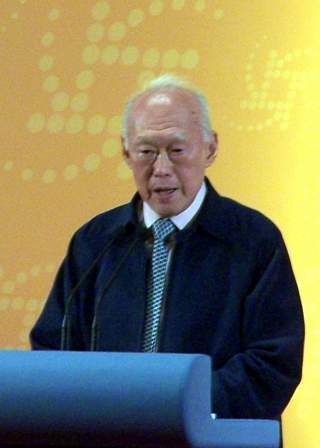

An integral part of Lee’s leadership style was his extraordinary organizational skills and relentless work ethic. A key symbol of his approach was the iconic “red box.” Likely inspired by the red briefcases used by British ministers, the red box became synonymous with Lee’s meticulousness and tireless dedication to his nation.
The red box has its roots in British government tradition. These large, leather briefcases have been used since the 19th century and are crafted by London’s Barrow and Gale. Introduced by Prince Albert, the boxes have maintained a consistent design, featuring red-stained rams’ leather and weighing between two and three kilograms. Each box is carefully handcrafted, taking about three days to complete. The most famous of these is the Chancellor’s Budget Box, a fixture at the British Treasury.
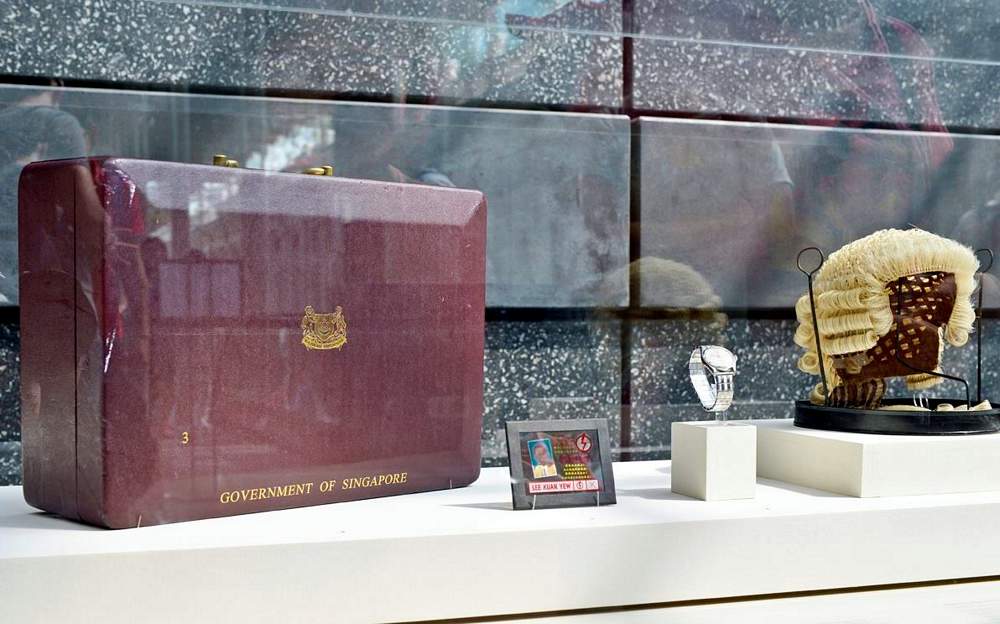
For Lee Kuan Yew, the red box was far more than just a briefcase. It symbolized his devotion to the leadership of Singapore, emblazoned with the words “Government of Singapore” and the national coat of arms. The box accompanied him everywhere, carrying crucial documents, speech drafts, letters, and even personal notes—essentially serving as his mobile office. It was a constant reminder of his commitment to his country.
Lee’s principal personal secretary, Heng Swee Keat, who worked closely with him 1997–2000, recalled how the red box was central to Lee’s daily routine. Each morning, before Lee arrived at the office, the box would be delivered, containing the previous day’s work and instructions for his staff. This ensured a smooth transition into the day’s work. During the years he worked on his memoirs, the box often contained drafts annotated by both Lee and his wife. At one point, it even housed cassette tapes of his dictated thoughts, which were later replaced by a digital recorder.

The contents of the red box reflected Lee’s sharp attention to detail. It wasn’t just about policy papers or foreign communications; the box contained notes on seemingly small matters, such as the health of a tree along an expressway, illustrating his hands-on approach to governance. Each day, after reviewing the contents, Lee would issue clear, actionable instructions, ensuring that nothing was overlooked.
Lee’s dedication to his work extended even during personal hardships. In 1996, after undergoing heart surgery, Lee requested that the red box be brought to him in the ICU so that his work could continue without interruption. Similarly, after the passing of his wife in 2010, Lee’s devotion to Singapore remained unshaken. During his period of mourning, he visited the Singapore River, having his security team photograph trash along the banks so he could address the issue the following day. This moment highlighted not only Lee’s deep emotional connection to his country but also his unyielding focus on improvement, even in the midst of personal loss.
.jpg "'Singapore From Third World to First' by Lee Kuan Yew (ISBN 0060197765)")

After Lee’s passing, the red box was displayed at the National Museum of Singapore as part of the In Memoriam: Lee Kuan Yew exhibition. This memorial, alongside other personal items such as his barrister wig and a Rolex Oyster Perpetual watch, encapsulate Lee’s lifelong commitment to Singapore. The red box was eventually added to the Museum’s permanent galleries, preserving a lasting symbol of Lee Kuan Yew’s legacy.