For over three decades, Airbus’Fly-by-Wire (FBW) technology has revolutionized the aviation industry, delivering operational benefits such as enhanced fleet management, reduced training costs, and improved pilot productivity. The A320, as the first airliner to implement FBW, marked a pivotal moment in aviation, advancing cockpit design and flight control systems. This technological leap has since been integrated across Airbus’ entire fleet, establishing a foundation of commonality that benefits both airlines and flight crews.
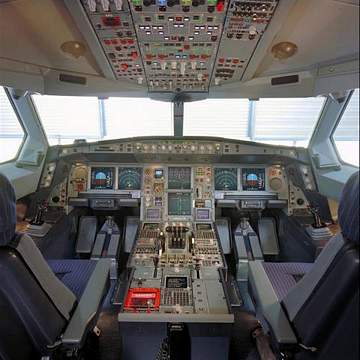

A key operational benefit of this commonality is Single Fleet Flying, which allows pilots to transition seamlessly between different Airbus models using the same type rating. This reduces the need for extensive retraining, offering airlines operational flexibility and cutting costs. Pilots can fly multiple variants, such as the A320, A320neo, and A321, under the same qualification, improving crew scheduling and aircraft utilization. Additionally, this flexibility extends to Airbus’ widebody models. The A330 and A350, for example, share similar handling characteristics, which allows pilots to switch between these models with minimal training—using ground-based trainers and laptop systems instead of full-flight simulators—offering significant cost savings.
Further streamlining pilot transitions is Cross Crew Qualification (CCQ), a process that allows pilots to quickly transition between different Airbus aircraft without requiring a full type rating. For instance, a pilot rated on the A320 can transition to the A330 in just a few days, learning only the differences between the two models. This is far more efficient than traditional type rating courses, which can take several weeks. The CCQ process also facilitates Mixed Fleet Flying (MFF), where pilots are qualified to operate both narrowbody and widebody Airbus aircraft. This enables airlines to deploy the same pool of pilots across both short-haul and long-haul operations, enhancing operational flexibility and reducing training costs.
Airbus also standardizes cockpit design, making it easier for pilots to adapt to new models. The control levers, side stick positions, and button configurations are similar across the entire fleet, reducing the time needed to familiarize oneself with a new aircraft. This consistency extends to the Electronic Centralized Aircraft Monitoring (ECAM) system, which is used to monitor the aircraft’s systems. The ECAM alerts pilots to system failures and provides emergency checklists, ensuring that pilots can respond to abnormalities in the same way, regardless of the Airbus model they are flying.
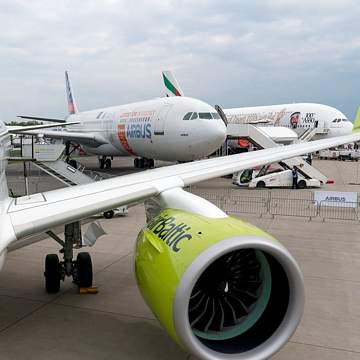
These efficiencies also translate to significant cost savings for airlines. With reduced training and retraining costs, airlines operating Airbus fleets can allocate resources more effectively, lowering overall operational expenses. Small carriers, in particular, can leverage the economies of scale that Airbus commonality offers, providing them with competitive advantages once reserved for larger operators.
Airbus commonality not only improves operational efficiency but also enhances pilots’ work-life balance and proficiency. Pilots have the flexibility to alternate between long-haul and short-haul flights, gaining more takeoff and landing experience, which keeps their skills sharp. The ability to fly different aircraft within the same fleet also opens up greater job mobility and offers pilots a more varied and rewarding career.