Two years ago, the blood-testing startup Theranos was one of the hottest assets in Silicon Valley. Valued at $9 billion, it guaranteed nothing short of a paradigm shift in medicine with its groundbreaking, needle-free test process. CEO Elizabeth Holmes, a 32-year-old Stanford dropout, was effusively profiled in the business press as the world’s youngest self-made female billionaire. But now, the company is fighting for its survival, in the midst of claims that its tests are “at best, fundamentally flawed and, at worst, unsafe.” The disturbance began six months ago, when The Wall Street Journal reported that the company’s breakthrough technology, which could reasonably run hundreds of tests with blood from a finger prick, couldn’t really deliver. Not long after, the Centers for Medicare & Medicaid Services, which regulates lab testing, said that Theranos put patients’ lives at risk with faulty tests at its California lab. The latest blow: The Justice Department and the Securities and Exchange Commission (SEC) lately began independent criminal investigations into whether Theranos deceived investors about its technology.
Nothing is proven yet. It’s very unusual for the SEC to investigate a privately held company like Theranos, but it could begin to happen more often. SEC Chair Mary Jo White wants to give more enquiry to the growing number of so-called unicorn startups, which are valued at more than $1 billion, “because they pose a high risk to investors.” The company’s fate is now in the hands of its charismatic founder—as the company’s leader, chairwoman, and majority stakeholder, Holmes can command what she wants done at her company. It’s a common procedure in Silicon Valley’s startup philosophy, where boards have “little real power.” Many venture capitalists are willing to take the risk, hoping to get in with the next Mark Zuckerberg, but “if trouble brews,” the cult encircling a founder can become a obligation. That’s largely because there is no such thing as investigative journalism in Silicon Valley. Journalism here is largely confused with, and deliberately conflated with, public relations, but they’re not the same thing.
So far, Theranos has never been able to establish its testing technology really works. Rather than publishing research in peer-reviewed journals, or letting its blood-testing machines to be assessed by external experts, the company has continually kept its methods cloaked in secrecy. Theranos has reasoned that it was guarding trade secrets, but testing openness is customary routine in the medical industry. Even drug companies, which function in a exceedingly aggressive segment, issue adequate results of their drug trials to establish that a medicine actually works, whilst even keeping sufficient details secret to make their product proprietary. Blood testing is a $73-billion-a-year commerce set for disruption—as any person who’s had blood drawn can confirm, it’s laborious, uncomfortable, and pricey.
Theranos is under investigation for fraud, which is weird for a private company. Theranos is performing tests on patients without having published peer reviewed research—a cardinal sin in science—and with minimal federal oversight. Theranos should have attracted scrutiny long before it did.
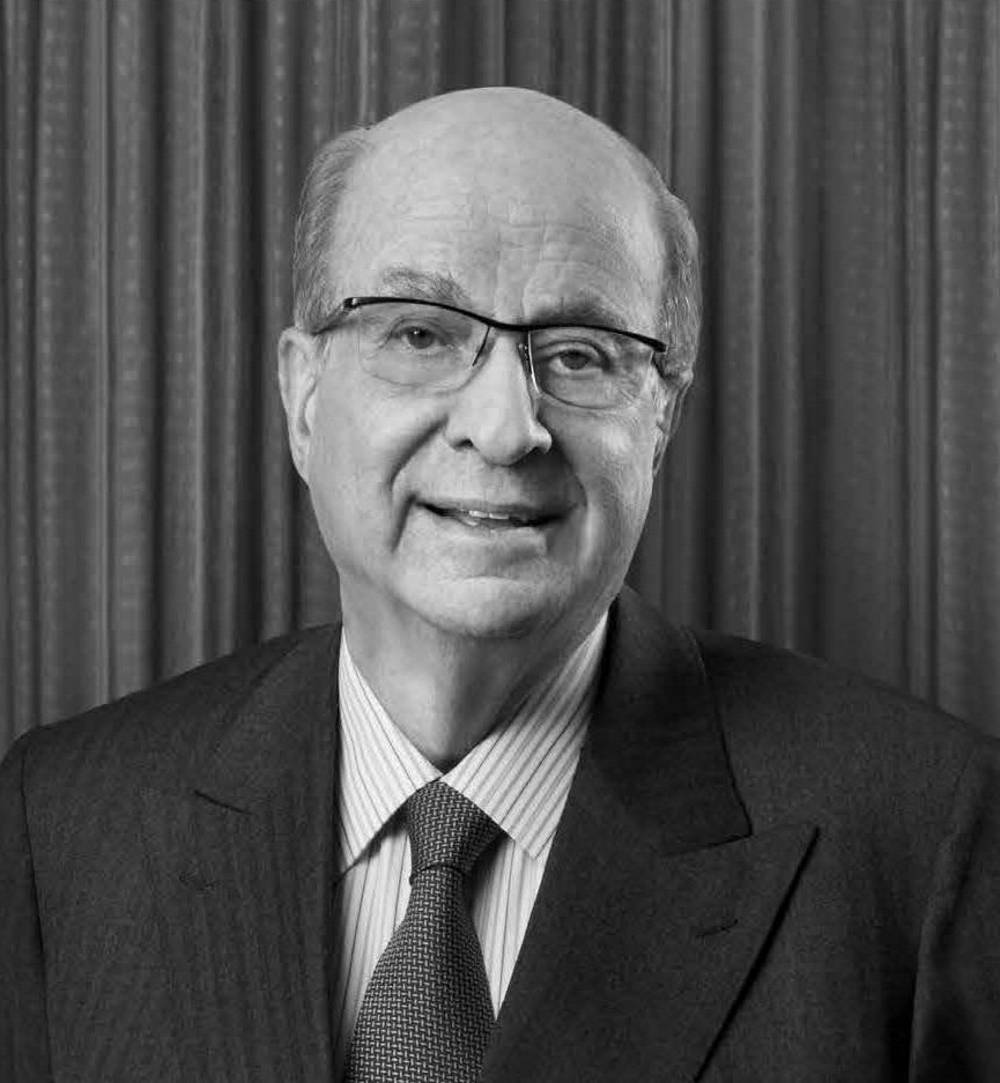
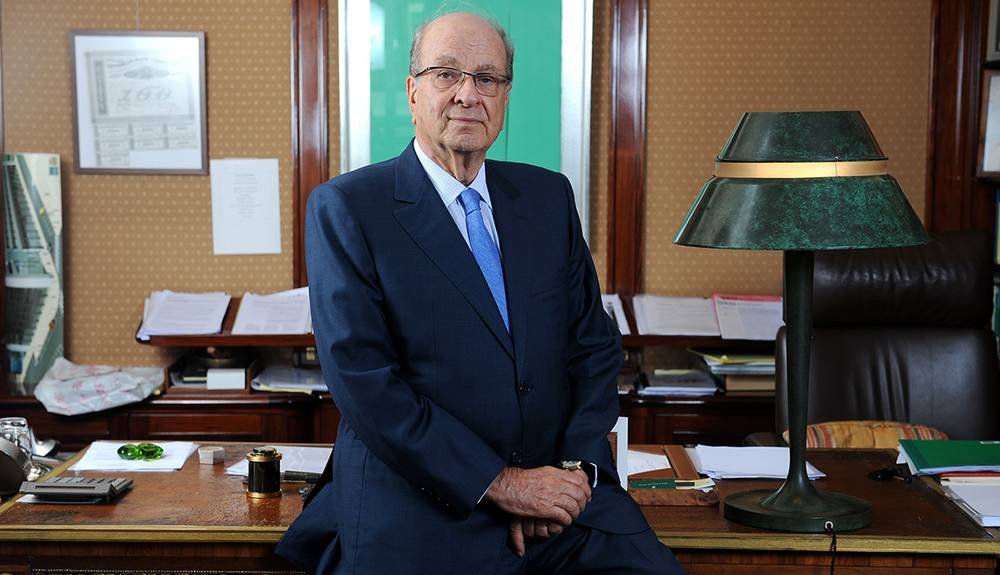
Edgar de Picciotto, an early promoter of hedge fund investing, passed away on Sunday 13 March 2016 after a long sickness. On November 12, 1969, de Picciotto opened his own asset-management bank in a city dominated by such well-known private banking names as Pictet Group, Lombard Odier, Darier and Hentsch.
Edgar de Picciotto founded Union Bancaire Privee (UBP) in 1969. UBP is one of the most favorably capitalized private banks in the world, and a leading player in the field of wealth management in Switzerland with $110 billion in assets under management at the end of December 2015. Edgar de Picciotto, who was born of Syrian-Lebanese parentage, moved to Switzerland in the 1950s and worked as a financier before founding UBP’s predecessor in 1969. From the bank’s inconspicuous headquarters on one of Geneva’s chief luxury-shopping drags, he built a customer base of affluent individuals and institutions all over Europe, the U.S., and the Middle East.
De Picciotto was born in Beirut and hailed from a lineage of businesspersons, which lived from the 14th to the 17th century in Portugal, moving in later centuries via Italy and Syria to the Lebanon. He afterward lived with his parents and brothers in Milan, ultimately deciding to study mechanical engineering in France. However, it was financial engineering, which took his perpetual fancy. He earned his spurs and made financial contacts, working in his previous father-in-law’s bank in Geneva. In its 2015 annual report, UBP recalled,
As our 2015 Annual Report was going to print, we learnt with deep sorrow that Edgar de Picciotto, the Chairman and founder of Union Bancaire Privee, had passed away at 86 years of age.
Edgar de Picciotto was a recognized creative visionary and pioneer in a wide variety of fields in the banking industry. He quickly rose to become a leading figure of the Geneva financial hub, and one of the most respected authorities on investments around the world.
In just a few decades, Edgar de Picciotto turned UBP into one of the world’s biggest family-owned banks. Very early on, he also set up a governance structure designed to ensure the Group’s longevity by integrating the second generation of his family into the business.
UBP is his life’s work. UBP is his legacy to us. It now falls to us to grow UBP with the same entrepreneurial spirit that he used to create the Bank, by perpetuating the values that Edgar de Picciotto would wish to see upheld every day and in everything we do.
Edgar de Picciotto’s children and all the members of UBP’s management are determined to carry on the spirit that its founder instilled in it, and they know that they can rely on the professionalism and dedication of all UBP’s staff members to continue to grow the Bank’s business, while also maintaining its independence.
In 2002, news of merger talks between two family-controlled private banks, Union Bancaire Privee (UBP) and Discount Bank & Trust Company (DTBT) over forming one of Geneva’s biggest private banks became newest sign of the altering attitude among the country’s private banks. Withdrawing from UBP’s operational management 20 years ago, de Picciotto set up a governance structure designed to guarantee the bank’s durability. His son Guy de Picciotto has been chief executive officer since 1998, while his daughter, Anne Rotman de Picciotto, and his eldest son, Daniel de Picciotto, are on the board of directors.
My purpose in reviewing Edgar’s thinking over the past 15 years is to show how he consistently tried to integrate his world view into the investment environment. That was his imperative. He wasn’t always right, but he was always questioning himself and he remained flexible. When he lost money, it tended to cause minimal pain in relation to his overall assets, and when one of his maverick ideas worked, he made what he called “serious money.”
Edgar de Picciotto as a Mentor
Mentors fall into two categories: there are those you work with every day who are incessantly guiding you to enhanced performance. The ability to serve as a great mentor is one of the most undervalued and underappreciated skills in finance. Perhaps better branded as a “role model,” an outstanding mentor can provide not only a wide-ranging knowledge base and technical skills, but also the sagacious financial judgment that implies the high-class investor. Perhaps of even larger importance, a mentor can express a “philosophy of practice,” including the optimal interaction with clients and economists, a procedure for remaining current with advances in the field, and a thorough concept of how the practice of finance fits into a full life. A sympathetic mentor can also provide counselling in selecting the best practice opportunity and can maintain a close relationship for many years.
Mentors are significant to all of us, as they teach us what can’t be learned from books or in the classroom. They set aside a concrete example of “how to get it done,” and, sometimes more importantly, what to be done, when to do it, and whom to engage in the effort. Their inspiration often carries us through when nothing else does.
Understand the consequence of understanding the macro environment. “Many people describe themselves as stock pickers … but you have to consider the economic, social, and political context in which the stocks are being picked.” De Picciotto indubitably showed he had a good nose for trends.
Meet as many people of authority as you can. “For him, networking never stopped.” De Picciotto took great pleasure from knowing smart people and exchanging ideas with them.
“Nobody owns the truth.” De Picciotto would test his ideas on those he cherished and, and if he ran into a convincing conflicting opinion, he would contemplate on it seriously and sometimes change his position. While he never lacked principle about his ideas, he was unprejudiced and malleable.
Value the trust and the delight of friendship and the vainness of resentment. De Picciotto was gratified of his own success but also an enthusiast of the success of others who were his friends.
Never talk about overlooked opportunities except when you are disapproving yourself. Be your own harshest critic. Even if you are an intellectual risk taker, you will make many mistakes. Diagnose them early, but never stop taking risks, because that is where the tangible opportunities are and your life will be more invigorating as a result.
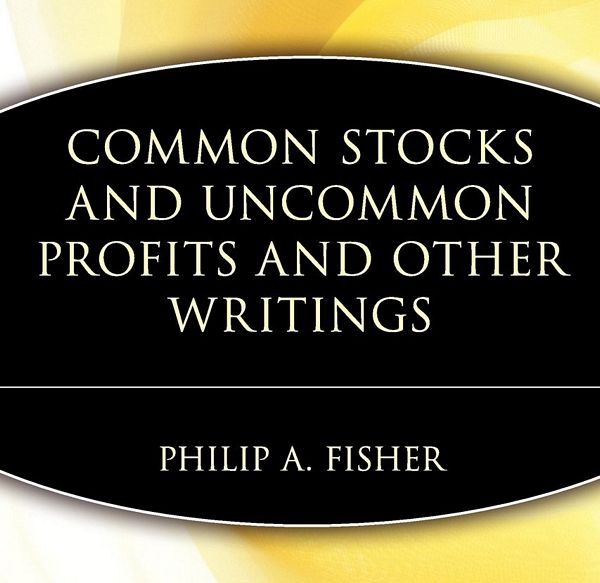
Philip Fisher (1907–2004) is widely considered the pioneer and thought process leader in long-term value investing. Years after his death, Fisher
is widely respected and admired as one of the most influential investors of all time. Fisher developed his long-term investing philosophy decades ago
and discussed them in his seminal book, Common Stocks and Uncommon Profits. Common Stocks and Uncommon Profits was first published in 1958
and continues to be a must-read today for investors and finance professionals around the world.
Today, we will dig deeper into his selling discipline. For many investors, buying a stock is much easier than deciding when to sell it. Selling securities is much more difficult than buying them. The average investor often lacks emotional self-control and is unable to be honest with himself. Since most investors hate being wrong, their egos prevent taking losses on positions, even if it is the proper, rational decision. Often the end result is an inability to sell deteriorating stocks until capitulating near price bottoms.
Selling may be more difficult for most, but Fisher actually has a simpler and crisper number of sell rules as compared to his buy rules (3 vs. 15). Here are Fisher’s three rules for selling a stock:
Wrong Facts: There are times after a security is purchased that the investor realizes the facts do not support the supposed rosy reasons of the original purchase. If the purchase thesis was initially built on a shaky foundation, then the shares should be sold.
Changing Facts: The facts of the original purchase may have been deemed correct, but facts can change negatively over the passage of time. Management deterioration and/or the exhaustion of growth opportunities are a few reasons why a security should be sold according to Fisher.
Scarcity of Cash: If there is a shortage of cash available, and if a unique opportunity presents itself, then Fisher advises the sale of other securities to fund the purchase.
Many investors are reactive and sell at the same time everyone else does—when they’re fearful. But your emotions aren’t the best guide for making critical financial decisions. Long-term investors should not fear occasional swings in the market. When the market dips or takes an unusual turn, that is the perfect time to review your portfolio and re-evaluate your investing strategy.
Vidhana Soudha which houses the Karnataka state Legislature and Secretariat is the most magnificent and majestic stone building in Bangalore and perhaps in Karnataka itself. It is said that when a Russian delegation felt that Bangalore was full of European buildings and asked the then chief minister Kengal Hanumanthaiah, “Have you no architecture of your own?”
This inspired Hanumanthaiah to plan a building and the result is the Vidhana Soudha, an epitome of Hindu architecture and a synthesis of Dravidian, Hoysala, Chalukya, and Vijayanagara architectural features. Its construction began in 1952 and was completed in 1956 at an estimated cost of 1.75 crores under a team of experts headed by the chief architect B.R. Manikam. More than 5000 laborers and 1500 skilled sculptors worked on this prestigious project.
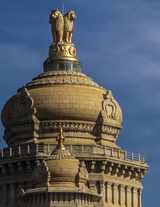
The entire structure covers an area of 720 x 360 ft. In the center is an open quadrangle measuring 260 x 250 ft. It is an imposing three storied building with a cellar. Though the building can be approached from all the four sides, the eastern entrance is majestic with 40 ft.-tall columns and flight of steps. The western side has a facade of Rajasthan palaces. The four corners have four towers supporting domes topped by glittering metallic kalashas (inverted pitcher pots.) The main dome is very elegant and has the Indian National Emblem of four Asiatic lions standing back to back mounted on a circular base on the kalasha. Though grey granite is used for exterior, green, bluish, pink and black stones have been used for decoration. The interior of the Vidhana Soudha consists of a banquet hall, Legislative Assembly Hall, Legislative Council Hall, and Cabinet meeting hall in addition to many rooms for the ministers and high officers.
The wood work is another great attraction of this building. Particularly noteworthy are the carved doors of the office of the chief minister, cabinet hall and legislature hall. They show the Karnataka School of wood work at its best which is still a living tradition. Thus Vidhana Soudha is a proud heritage building built in the 20th century testifying to the architectural and sculptural tradition of ancient Karnataka. This building is an eloquent testimony to the continuation of ancient architectural and sculptural tradition of Karnataka as practiced by the Chalukyas, Hoysalas and Vijayanagara rulers. Thus this is a modern building in ancient style of Karnataka. That is the uniqueness of this elegant building.
Any visitor to Bangalore cannot afford to miss this magnificent building, a proud heritage structure of Karnataka, particularly when it is illuminated.
Walmart has always been criticized for its policies against labor unions. Supporters of unionization efforts blame workers’ reluctance to join the labor union on Walmart’s anti-union tactics such as managerial surveillance and pre-emptive closures of stores or departments that choose to unionize. Leaked internal documents show that Walmart’s strategy for fighting to keep its workers from forming unions includes instructing managers to report suspicious activity and warning workers that joining unionizing efforts could hurt them.
Walmart’s management has contended that it’s employees do not need to pay third parties to discuss problems with management as the company’s open-door policy enables employees to lodge complaints and submit suggestions all the way up the corporate ladder. Sam Walton, founder of Walmart wrote in his autobiography:
I have always believed strongly that we don’t need unions at Wal-Mart. Theoretically, I understand the argument that unions try to make, that the associates need someone to represent them and so on. But historically, as unions have developed in this country, they have mostly just been divisive. They have put management on one side of the fence, employees on the other, and themselves in the middle as almost a separate business, one that depends on division between the other two camps. And divisiveness, by breaking down direct communication makes it harder to take care of customers, to be competitive, and to gain market share. The partnership we have at Wal-Mart—which includes profit sharing, incentive bonuses, discount stock purchase plans, and a genuine effort to involve the associates in the business so we can all pull together—works better for both sides than any situation I know of involving unions. I’m not saying we pay better than anybody, though we’re certainly competitive in our industry and in the regions where we’re operating; we have to be if we want to attract and keep good people. But over the long haul, our associates build value for themselves—financially and otherwise—by believing in the company and keeping it headed in the right direction. Together, we have ridden this thing pretty darned far.
The problem with value investing is it requires too much work.
First you have to find an undervalued stock and buy it cheap. Then you have to sell it when it the price reaches or exceeds your calculated figure for its intrinsic value.
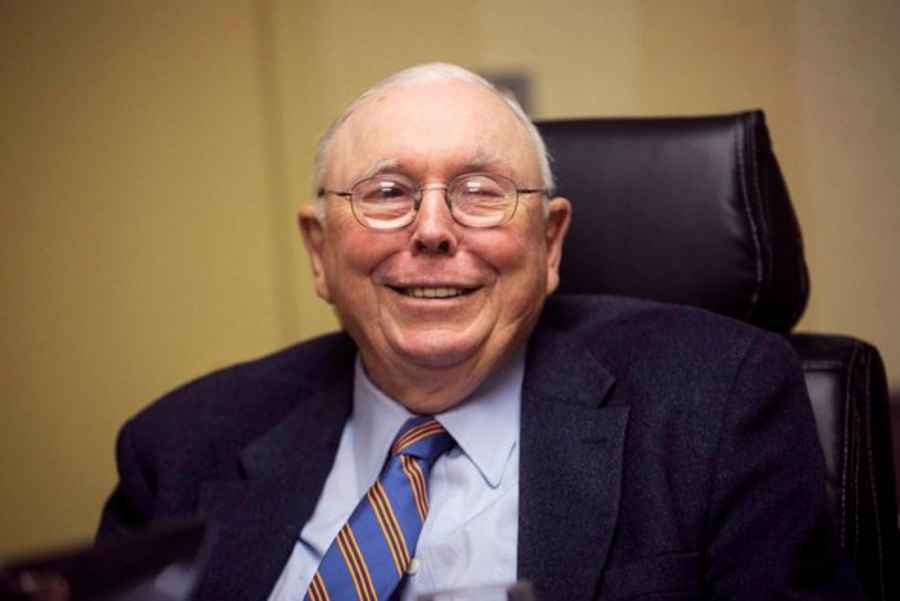
Because this requires many decisions over a long period of time, Charlie Munger prefers his own method in which all you have to do is pick a really great company when it is attractively priced, and then just sit on your ass. The great advantage being that it only requires one decision.
Charlie said: “If you buy a business just because it’s undervalued then you have to worry about selling it when it reaches its intrinsic value. That’s hard. But if you can buy a few great companies then you can sit on your ass … that’s a good thing.”
The whole idea of not having to do something extraordinary is one all investors should heed, yet it is easy to forget, particularly in stressful situations.
On the interplay between CEOs and corporate directors regarding compensation: “You start paying directors of corporations two or three hundred thousand dollars a year, it creates a daisy chain of reciprocity where they keep raising the CEO and he keeps recommending more pay for the directors.”
On CEO pay and work habits: “Does the Supreme Court work less hard because they don’t get paid like corporate executives? We have some corporate directors who draw more pay than members of the Supreme Court. That’s crazy,”
On taxing the 1%: “The taxes on wealth were much higher when I was much younger. So for somebody of my age, I don’t think they’re ruining the world because I’ve lived through way more punitive taxes on the rich than we have now … I don’t think everybody who’s been especially favored should take the last dollar that he or she should get. I think we all have an obligation to dampen these fires of envy.”
On Facebook, Twitter, and the appeal of social media: “It just doesn’t interest me at all to gab all the time on the Internet with people and I certainly hate the idea of young people putting in permanent form the dumbest thoughts and the dumbest reports of action that you can ever imagine.”
On his favorite advance in technology: “I’m in love with the Xerox machine.”
On Donald Sterling, the then-owner of NBA Clippers, who then faced racial remarks and lifetime ban:”He’s a peculiar man. He’s past 80. His girlfriend has had so many facelifts she practically can’t smile. This is not the noblest ideal of what the American businessman should be.”
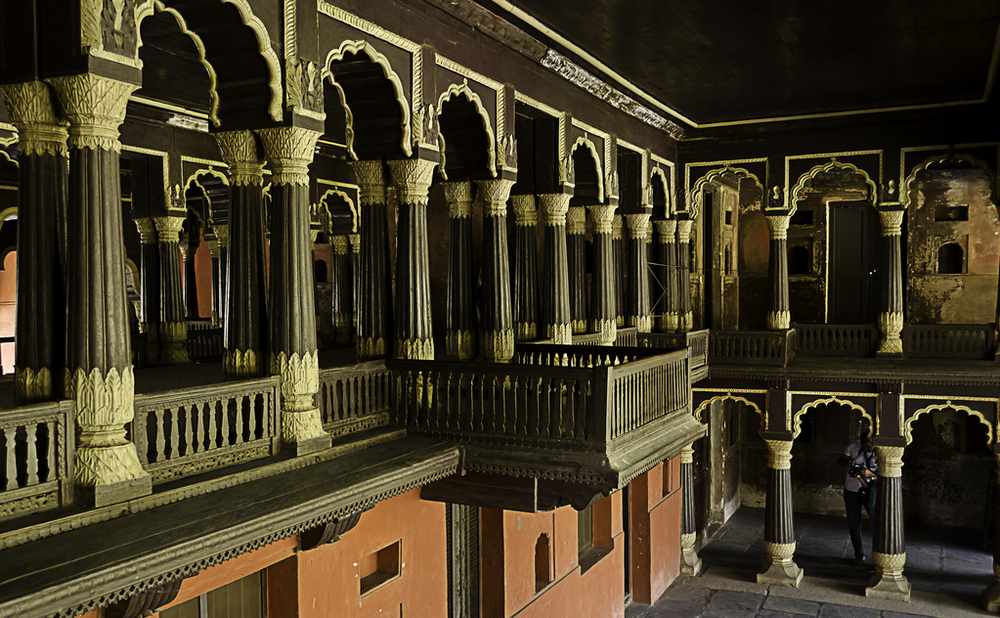
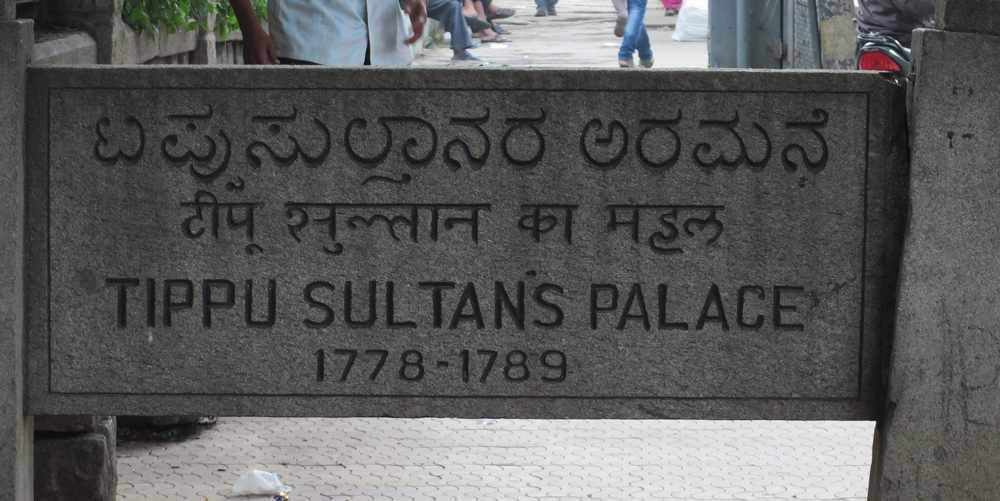
It is said that this palace was begun by Haidar Ali in 1781 and Tipu made use of it later. Though the original facade and the frontal portions are not available now, the palace still makes a lasting impression as an elegant and magnificent structure worthy of the palace. The palace is basically built of wood, except for the peripheral outer walls built of mud and bricks.
The superstructure is of wooden frame with two stories with minute wooden carving decorations. What now remains is a frontal corridor with an upper balcony. Wide cusped arches are very conspicuous by their presence and they add a great majestic appearance. The wooden pillars with tapering design are very tall and this adds majesty to the entire structure. The walls and ceilings are of great attraction as they contain paintings of the contemporary period, consisting mostly of geometric designs and floral decorations.
Originally the upper story had four halls each comprising of two balconies and some rooms. The balconies faced parts of the office and was also used by the prince. At times it served as an audience hall also. At the end of the balconies were some rooms which were used for private purposes of the family of the Sultan. Though they look small from the present standards, with high roof they were cool and convenient for the people to live. There is a Persian inscription to the left of the verandah which calls it abode of happiness and envy of heaven. Its construction was started in 1781 and was completed in 1791 A.D.
After the death of Tipu Sultan it was used by Krishnaraja Wadeyar III to give audience to the citizens of Bangalore in 1808. Subsequently it was temporarily used by the British army. The Karnataka State Secretariat also worked from here. Finally it was taken over by the Archaeological Survey of India which has made it a protected monument. Thus it is a rare and elegant wooden palace at Bangalore.
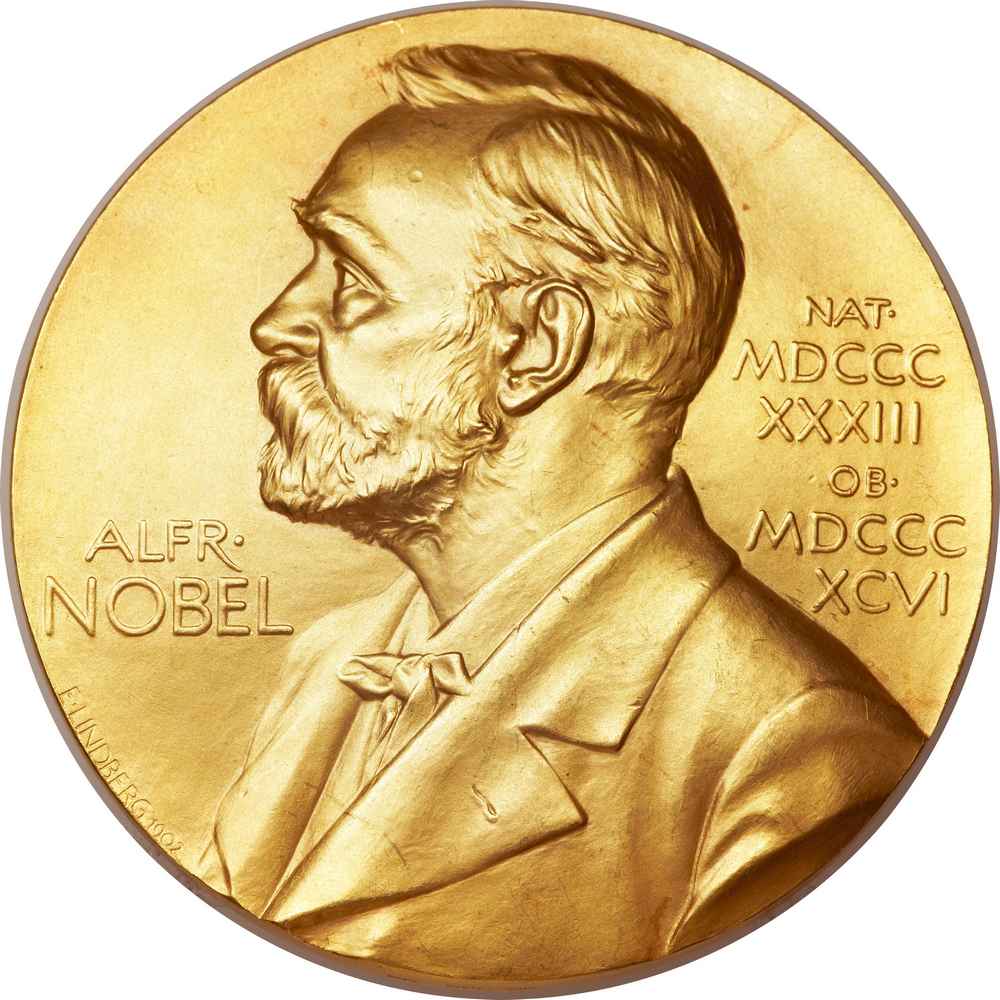
Many of the best writers of the past 112 years have received the Nobel Prize in Literature, but there have been some astounding omissions right from the start. The list of great writers who were alive after 1901 but never received the prize is shocking.
“We are all prisoners of our past. It is hard to think of things except in the way we have always thought of them. But that solves no problems and seldom changes anything.”
— Charles Handy (b. 1932), British Management Guru
“Not everything that is faced can be changed. But nothing can be changed until it is faced.”
— James Baldwin (1924–1987), American Novelist
“If anything is certain, it is that change is certain. The world we are planning for today will not exist in this form tomorrow.”
— Philip Crosby (1926–2001), Expert on Quality Management
“Every new change forces all the companies in an industry to adapt their strategies to that change.”
— Bill Gates (b. 1955), Computer Pioneer and Philanthropist
“Change is the law of life. And those who look only to the past or the present are certain to miss the future.”
— John F. Kennedy (1917–63), American Head of State
“To exist is to change, to change is to mature, to mature is to go on creating oneself endlessly.”
— Henri Bergson (1859–1941), French Philosopher
“Change masters are – literally – the right people in the right place at the right time. The right people are the ones with the ideas that move beyond the organization’s established practice, ideas they can form into visions. The right places are the integrative environments that support innovation, encourage the building of coalitions and teams to support and implement visions. The right times are those moments in the flow of organizational history when it is possible to reconstruct reality on the basis on accumulated innovations to shape a more productive and successful future.”
— Rosabeth Moss Kanter (b. 1943), Harvard Professor of Management
“If you want truly to understand something, try to change it.”
— Kurt Lewin (1890–1947), American Psychologist
“Producing major change in an organization is not just about signing up one charismatic leader. You need a group – a team – to be able to drive the change. One person, even a terrific charismatic leader, is never strong enough to make all this happen.”
— John Kotter (b. 1947), American Management Consultant
“The art of progress is to preserve order amid change and to preserve change amid order.”
— Alfred North Whitehead (1861–1947), English Mathematician and Philosopher
“There is nothing more difficult to take in hand, more perilous to conduct, or more uncertain in its success, than to take the lead in the introduction of a new order of things.”
— Nicolo Machiavelli (1469–1527), Italian Diplomat and Author
“Where there are changes, there are always business opportunities.”
— Minoru Makihara (b. 1930), Japanese Executive and CEO of Mitsubishi Corporation
“Change is inevitable – except from a vending machine.”
— Robert C. Gallagher, American Humorist
“The new always carries with it the sense of violation, of sacrilege. What is dead is sacred; what is new, that is, different, is evil, dangerous, or subversive.”
— Henry Miller (1891–1980), American writer
“The manager, in today’s world, doesn’t get paid to be a steward of resources, a favored term not so many years ago. He or she gets paid for one and only one thing: to make things better (incrementally and dramatically), to change things, to act – today.”
— Tom Peters (b. 1942), American Management Guru
“We cannot become what we need to be, by remaining what we are.”
— Max De Pree (b. 1924), American Business Executive
“Change is scientific, progress is ethical; change is indubitable, whereas progress is a matter of controversy.”
— Bertrand Russell (1872–1970), British Philosopher, Logician, and Mathematician
“If you can’t change your fate, change your attitude.”
— Amy Tan (b. 1952), American Author
“There are companies which are prepared to change the way they work. They realize that nothing can be based on what used to be, that there is a better way. But, 99 percent of companies are not ready, [they are] caught in an industrial Jurassic Park.”
— Ricardo Semler (b. 1959), Brazilian Business Executive and Author
“Change Management: The process of paying outsiders to create the pain that will motivate insiders to change, thereby transferring the change from the company’s coffers into those of the consultants.”
— Eileen Shapiro, American Management Author
“If an organization is to meet the challenges of a changing world, it must be prepared to change everything about itself except beliefs…. The only sacred cow in an organization should be its basic philosophy of doing business.”
— Thomas Watson Jr. (1914–93), American Business Executive
“A change of heart is the essence of all other change and it is brought about by a re-education of the mind.”
— Emmeline Pethick-Lawrence (1867–1954), English Women’s Rights Activist
“Organizations need employees who understand that change is the norm and employees who are prepared to learn continuously.”
— Beverly Goldberg, American Management Author
“We are living through the most profound changes in the economy since the Industrial Revolution. Technology, globalization, and the accelerating pace of change have yielded chaotic markets, fierce competition, and unpredictable staff requirements.”
— Bruce Tulgan (b. 1967), American Business Author
“You can’t move so fast that you try to change the [norms] faster than people can accept it. That doesn’t mean you do nothing, but it means that you do the things that need to be done according to priority.”
— Eleanor Roosevelt (1884–1962), American First and Author
















 "'Sam Walton: Made In America' by Sam Walton (ISBN 0553562835)")

.jpg "'Charlie Munger: The Complete Investor' by Tren Griffin (ISBN 023117098X)")


.jpg "'Poor Charlie's Almanack: The Wit and Wisdom of Charles T. Munger' by Peter D. Kaufman and Ed Wexler (ISBN 1578645018)")







.jpg "'Leading Change' by John P. Kotter (ISBN 1422186431)")

.jpg "'Managing Change (Pocket Mentor)' by Harvard Business School Press (ISBN 1422129691)")


.jpg "'Managing Change in Organizations: A Practice Guide' by Project Management Institute (ISBN 1628250151)")

.jpg "'Lean Change Managment: Innovative Practices For Managing Organizational Change' by Jason Little (ISBN 0990466507)")